They Said Buy

About the project The story behind the receipts

Stock talk deserves a paper trail.

A new video arrives. An old stock pick slips from memory. We keep the original words, the date, and the price that followed—so you can go back and see for yourself.

From public video to price timeline

  1. 01

    The video

    We analyze public videos from investing creators.

  2. 02

    The words

    A short quote, its speaker, and a link to the exact moment.

  3. 03

    The starting price

    The publication date anchors a split-adjusted closing price.

  4. 04

    What followed

    The stock’s price change, beside SPY over the same dates.

01 / Follow a receipt

Same stock. Different dates.

Three public statements about Amazon. Choose a date to see the video moment and the price movement that followed.

The receipt / 01

Tom Nash × AMZN

01 The public statement

Frame from Tom Nash's video at 5:01.5:01
Tom NashVideo published · New York time

“Stock number one is going to be Amazon. Stock number two is going to be Palanteer. Stock number three is going to be Microsoft.”

Named as a pickWord for word · linked to the second
Watch the source at 5:01 (opens in a new tab)

A Once in a Lifetime Investment Opportunity is Coming.

02 The price that followed

Starting close
$198.79
Latest close
$254.60
AMZN daily closing price, selected quote on Feb 13, 2026The red line shows daily split-adjusted closes from this quote's starting date to 2026-10-28. Starting close $198.79; latest close $254.60; price change +28.1%. Earlier prices are gray.$180$240$300This quote ↓FebAprJunAugOct
AMZN since this quoteDaily close · split-adjusted
AMZN+28.1%
S&P 500 · SPY+13.3%

Same dates, same comparison: Feb 13, 2026 → Oct 28, 2026.

The receipt / 02

Tom Nash × AMZN

01 The public statement

Frame from Tom Nash's video at 13:17.13:17
Tom NashVideo published · New York time

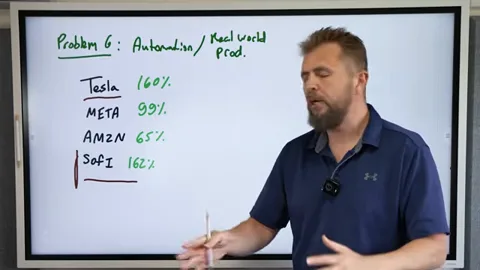
“Amazon's up 65%, Meta's up 99%, and Tesla's up 160% since we added it. Now, the thing with Amazon, literally did nothing by the way over the past 5 years while the company's gotten better. This is probably one of the most lucrative opportunities right now in the stock market.”

Named as a pickWord for word · linked to the second
Watch the source at 13:17 (opens in a new tab)

History is About to Be Made... [Last Big Wealth Opportunity For A Decade]

02 The price that followed

Starting close
$263.99
Latest close
$254.60
AMZN daily closing price, selected quote on Apr 24, 2026The red line shows daily split-adjusted closes from this quote's starting date to 2026-10-28. Starting close $263.99; latest close $254.60; price change -3.6%. Earlier prices are gray.$180$240$300This quote ↓FebAprJunAugOct
AMZN since this quoteDaily close · split-adjusted
AMZN-3.6%
S&P 500 · SPY+8.2%

Same dates, same comparison: Apr 24, 2026 → Oct 28, 2026.

The receipt / 03

Tom Nash × AMZN

01 The public statement

Frame from Tom Nash's video at 14:11.14:11
Tom NashVideo published · New York time

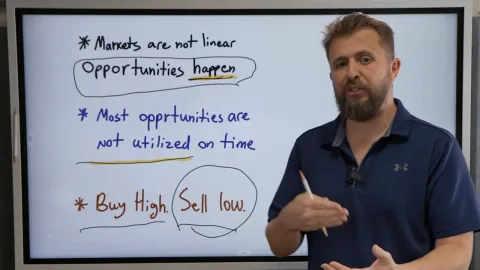
“Amazon is down 17% from its highs, but I think it has the biggest bullcase of these three at 144% upside.”

Buying the dipWord for word · linked to the second
Watch the source at 14:11 (opens in a new tab)

Dips Never Last: I’m Buying These 3 Stocks Now.

02 The price that followed

Starting close
$231.39
Latest close
$254.60
AMZN daily closing price, selected quote on Jul 27, 2026The red line shows daily split-adjusted closes from this quote's starting date to 2026-10-28. Starting close $231.39; latest close $254.60; price change +10.0%. Earlier prices are gray.$180$240$300This quote ↓FebAprJunAugOct
AMZN since this quoteDaily close · split-adjusted
AMZN+10.0%
S&P 500 · SPY+4.5%

Same dates, same comparison: Jul 27, 2026 → Oct 28, 2026.

Example data comes from our Tom Nash / AMZN record. Prices: Yahoo Finance, as of Oct 28, 2026.

How the numbers work →

02 / Read the label

The wording makes a difference.

Talking about a company, naming a pick, and disclosing a holding each tell you something different.

Illustrative wording below—not quotes from a creator.

01

Mention

“Let’s look at Amazon’s latest results.”

The company is discussed. The statement alone does not establish a recommendation or a position.

What this label tells you

A company name can appear in a comparison, a news update, or a discussion of someone else’s views. The surrounding context matters.

02

Named as a pick

“Amazon is one of my stock picks.”

The speaker names the company as a pick. This records a stated preference, without assuming a trade.

What this label tells you

Other labels preserve distinctions such as buying the dip, a conditional view, or a price target. Positive language is not automatically treated as a buy recommendation.

03

Disclosed holding

“I hold Amazon in my portfolio.”

The speaker explicitly says they own a position. The record reflects that disclosure at that time.

What this label tells you

We do not infer ownership from an opinion. We do not know whether a position was later changed unless a subsequent public disclosure says so.

What every label means

We use specific labels to preserve the meaning of a statement — the difference between mentioning a company, naming it as a pick and saying you own it is the whole point of this record. Every quote on the site carries one of these.

Risk acknowledged
The speaker names a risk or a way the idea could go wrong, without changing the position.
Named as a pick
Put forward as a choice worth considering, without disclosing a position in it.
Buying the dip
A fall in the price is treated as the reason to buy, rather than a reason to worry.
Hold, bullish
The position is being kept, and the speaker still expects it to do well.
Disclosed holding
The speaker says they own it, without describing a new purchase.
Valuation view
An estimate of what the business is worth. It is not a trade and not a target price.
Conditional
The view holds only if something else happens first — usually the price reaching a level.
Price target
A specific price the speaker named, with the horizon if they gave one.
Top conviction
Named as the speaker's highest-conviction idea, ahead of everything else they hold.
Sold / selling
The speaker says they sold out, or are selling out, of the position entirely.
Reducing
Part of the position is being sold; the rest is kept.
Avoid
The speaker says to stay away from the stock. No position is implied either way.
Mention
The company came up, but nothing was claimed about owning or buying it — often it is about what somebody else is doing.
Disclosed buy
The speaker says they bought, and describes the purchase.
Disclosed sell
The speaker says they sold, and describes the sale.
Not buying more
The position is kept, but nothing more is being added to it.
Short / hedge
Opening or holding a bet against the stock: a short, puts, an inverse ETF. Closing a hedge is not this label.

On portfolio pages

Portfolio pages record what was disclosed on camera rather than what was argued, so they use their own set.

Position
A holding named on camera, usually with its size.
Weight
The share of a portfolio or account that the holding takes up.
Bought
A purchase described on camera.
Sold
A sale described on camera.
Trimmed
Part of a holding sold, the rest kept.
Added
More bought of something already held.
Largest position
Named as the biggest holding in that account.
Cost basis
The price originally paid for the holding.
Gain / loss
The profit or loss on a holding, as stated on camera.
Not holding
The speaker says they do not own it.
Hedge
Protection against a holding, rather than a new position.
Allocation
How a portfolio is split up, rather than a single holding.
Options trade
An options trade described on camera, such as selling puts or covered calls — not a share position.
03 / The method

Follow the source.
Check the numbers.

Our job is to make the record easier to examine. Here are the rules behind each quote and price comparison.

Something look wrong? Tell us ↗

Start with the public video

We analyze public YouTube videos and identify statements about publicly traded companies. Each excerpt links to its original video and starting timestamp. We attribute it to the person speaking; a guest’s view belongs to the guest.

The archive is a selected record of public statements, not a complete history of everything a creator has said.

Selection, context, and coverage

Page-level coverage shows the period and videos reviewed. Short excerpts preserve the statement’s meaning; follow the video link for the full context.

Use one clear starting point

We use Yahoo Finance daily closing prices, adjusted for stock splits. The starting close is the regular-session close on the video’s publication date in New York time. If markets were closed that day, we use the last trading close before it.

“Since” compares that starting close with the latest available close dated on the page. The page summary, cards and highlighted chart period start at the first quote with a clear directional forecast. Earlier quotes stay in the timeline. If there is no directional forecast, the summary starts at the first quote. Each individual quote keeps its own starting close.

Once 1, 3, 6 or 12 months of trading (21, 63, 126 or 252 trading days) have passed since a quote, it also shows its change over that span, beside SPY over the same dates. These spans start at the first close after the video, the close the leaderboard scores from: the publication day’s own close only when the video came out before 4 p.m. New York time on a trading day, otherwise the next trading day’s.

Price change(latest close ÷ starting close − 1) × 100

What the number does and does not include

A video published after the market closes still uses that publication day’s close. The number is a consistent reference point, not a claim that a viewer could have traded at that price.

For example, a move from $100 to $110 is a +10% price change. The charts show price movement; they do not include dividend reinvestment, trading fees, or taxes.

When a stock splits, earlier closes are restated in the new share count, so a change measured across the split stays comparable. A quote made before a split shows the price the stock actually traded at that day, with the split-adjusted close used for the percentage beneath it, and the chart marks the split.

What the bull, bear and newspaper mean

A bull or bear reflects the first clear bullish or bearish forecast, even when earlier quotes have no direction. A happy or disappointed expression shows whether the subsequent price movement followed that direction. A calm character means the price remains within 1% of its starting level.

The newspaper marks a record we cannot score this way: mentions without a forecast, unclear direction, or opposing views over time. The panel explains which case applies. Buying, selling, holding, or naming a target price alone does not establish a directional forecast. Closing or holding a hedge is not a forecast. A statement about a group of companies is not a forecast for one of them.

The leaderboard uses only a timeline’s first episode: from its first forecast until a later opposite forecast or a sale, for at most six months.

The illustrations do not assess whether a specific price target or deadline was met, and do not represent a creator’s realized return.

Compare the same dates

SPY, the ETF tracking the S&P 500, provides market context. Its comparison uses the same starting and ending trading dates as the stock. Changing the selected quote changes the starting point for both.

What the comparison can tell you

A price rise may coincide with a rise in the wider market. Showing both changes helps put the move in context. It does not measure a creator’s skill, risk-adjusted performance, or the outcome of an actual portfolio.

The leaderboard scores each call against SPY over the same dates, six months after the call: more than 2 percentage points ahead of SPY beats the market, more than 2 behind lags it, and anything in between is in line. Its outcomes are calculations under that method, not statements about skill.

Quote it word for word

Every quote is reproduced word for word from the video and linked to the second it was said, so anyone can check it against the source. A quote records that the words were said; it does not verify the creator’s claims about a company or an investment.

Wording and corrections

We preserve the speaker’s meaning and context. Obvious company-name misspellings may be normalized. If the wording, speaker, timing, or context is wrong, we review the report and correct or remove the affected record. See the corrections log.

Say the short version out loud

Each page carries a short written summary. It is drawn only from the videos quoted on that page: no outside reporting, no figures the creator did not state on camera. It is dated, and it is revisited when the page's data changes.

What a summary may and may not say

A summary restates what was said and when, including the parts that cut against the position. It does not estimate what a creator owns, infer a trade that was never mentioned, or turn an opinion into a recommendation. Where it gives a number — a price, a weight, a target — that number came from a quote on the same page.

An independent project

The record is open to scrutiny.

They Said Buy is built and maintained by a small team. We are independent of the creators and brokers we cover and are not affiliated with or endorsed by them (removal and copyright requests), and we do not sell stock picks. Our work is to make public investing statements easier to find, revisit, and understand.

Have a question, more context, or a correction?

Get in touch How corrections work